Kids These Days...

last statement

"Warden I am ready."

The opportunity to make a last, or final statement, has generally been offered to criminals before they are executed. The Texas Department of Criminal Justice maintains a list of executed offenders' last statements. The most recently executed offender, Michael Richard had this to say:
Yes, I would like for my family to take care of each other. I love you Angel, Let's ride. I guess this is it.[1]
The inmate's final statement is taken two hours before their execution, and they are allowed to amend the statement immediately prior to execution.


http://en.wikipedia.org/wiki/Last_statement


other infor about TEXAS criminal justice
A link to all death row infor- http://www.tdcj.state.tx.us/stat/deathrow.htm
http://www.answers.com/topic/texas-department-of-criminal-justice
http://www.fdp.dk/uk/tdcj/exe-proc.htm
excution processure http://www.fdp.dk/uk/tdcj/exe-proc.htm
Gender and Racial Statistics of Death Row Offenders


I don't know but here is their last meal, literally
http://www.thememoryhole.org/deaths/texas-final-meals.htm
And visualization recommended by Suguru - http://www.privatehand.com/flash/request.html
some work done by others
many eyes' work  http://manyeyes.alphaworks.ibm.com/manyeyes/visualizations/4a6ff9dcd24e11debe10000255111976/comments/91e3737ad24e11debe10000255111976

Downloadable txt file of all last statements are accessible through ManyEys here


http://www.markallencam.com/?p=64

how about laser cut a image and reorganize it?

We Feel Fine In Polaroid Project, I had two hours to take 150 Polaroid exposures of a live audience, and then assemble these photographs into a grid that told some kind of story.
Starting in opposite corners are uncut pictures of a fully clothed man (bottom left / tinted blue) and a fully clothed woman (top right / tinted pink). Both genders twist towards the center along curved paths, discarding clothes, wigs, shoes, and other accessories along the way, as the photos start to shatter, becoming less about objects and more about flesh. Approaching the center, the pictures are increasingly difficult to decipher, as body parts blend together and their owners’ identities dissolve.  Throughout the piece, the male and female cut marks are symmetric, mirrored copies of each other, extending beyond the boundaries of the photographs into the white border, itself composed of the individual white borders of all 150 Polaroids, so that the whole canvas comes to resemble a single giant exposure.
Polaroid Project was assisted by Kyla Fullenwider.
polaroidproject.org . statement . photos . process

magnet grade

One MGOe is 1,000,000 Gauss Oersted. A grade forty (N40) would have a Maximum Energy Product of 40 MGOe. The higher the grade the “stronger” the magnet.

[http://www.rare-earth-magnets.com/magnet_university/magnets_FAQ.htm]

AI vs Epilog Engraver

Looks like a unhappy couple... Though for Illustrator CS4 + Epilog Helix 24 Laser , set the lineweight to 0.1pt seems to work fine.  
--
"raster just fine, but never could vector anything"
" It was explained to me that they had to be 'hairline' width lines which Corel and AutoCAD can create, but Illustrator cannot.“
”My laser will vector cut as per the manual specifications-- any line width set for .001" or .025mm gets sliced.“

”If this doesnt work for you, also try separating your vectoring and rastering into two different layers in AI, then print them as separate jobs (just make one layer invisible in the layers palette, load the visible one, then do the same with the other). Make sure there's no stray or invisible anchors left in your drawing by going to Object/Path/Cleanup in AI.
In the print driver, select raster only and vector only. Load both layers to the laser before starting the jobs, and you should have no alignment problem."

"Illustrator does not have a "thin enough" line weight built in. For versions CS and above, typing .0001" in the stroke field works well.”


[http://www.sawmillcreek.org/showthread.php?t=55001]

Tensegrity

http://en.wikipedia.org/wiki/Tensegrity

Special Grant 4th Student Competition“Textile Structures for New Building” 1997
Though old, this site has some inspiring ideas on movable structure at architectural scale. Could those be  future Archi bots?

Polyhedral toy

Shift register


In this case you should connect the cathode (short pin) of each LED to a common ground, and the anode (long pin) of each LED to its respective shift register output pin. Using the shift register to supply power like this is called sourcing current. Some shift registers can't source current, they can only do what is called sinking current. If you have one of those it means you will have to flip the direction of the LEDs, putting the anodes directly to power and the cathodes (ground pins) to the shift register outputs. You should check the your specific datasheet if you aren't using a 595 series chip. Don't forget to add a 220-ohm resistor in series to protect the LEDs from being overloaded.

My TPIC6C595 can only be used as drain... and the max source to drain current is 250mA.
The schema above wouldn't work, unless LED are reversed.  

[http://www.arduino.cc/en/Tutorial/ShiftOut]


�3 states� refers to the fact that you can set the output pins as either high, low or �high impedance.� Unlike the HIGH and LOW states, you can�t set pins to their high impedance state individually. You can only set the whole chip together. This is a pretty specialized thing to do -- Think of an LED array that might need to be controlled by completely different microcontrollers depending on a specific mode setting built into your project. Neither example takes advantage of this feature and you won�t usually need to worry about getting a chip that has it.
[http://arduino.cc/en/Tutorial/ShiftOut]

Integrated circuit packaging

Digikey isn't as friendly as McMaster... so here wiki decodes the IC packaging dimentions. And terminologies are explained here.

dual in-line package (DIP), sometimes called a DIL package, is the one used on through-hole PCB.

Enjoy Christmas. Maybe.

thermal [fax] paper

Somehow it's not that easy to find the temperature threshold of thermal pape. Here is one semi-quantitative description.

Slight darkening was noticed at 70° c, then up to complete darkening at 100°c. The darkening did not transfer to blotter when the paper was heated from the back.

[http://cool.conservation-us.org/byorg/abbey/an/an13/an13-8/an13-802.html]

Available locally at Statples.

Heat Sealing 101

[http://heatsealing.blogspot.com/]
 
Heat sealing is a term used to define a method of attaching one or more layers of thermo-plastic synthetic material to itself. Other options exist for non-thermo-plastic materials such as sewing, adhesives, heat activated tapes and mechanical means. However, for thermo-plastic materials, heat sealing is the most cost efficient method producing the best quality seam in the least amount of time.


For most applications, heat sealing processes include two critical components – application of heat under pressure followed by a cooling cycle or no heat under pressure. Depending on the method used, heat sealing can be used to seal 2 or more layers of material, similar and/or dissimilar materials, ie. Polyethylene to polyethylene, or polypropylene to polyester; and a wide range of material thicknesses (or weights).


R.F. or High Frequency Heat Sealing
Uses high frequency energy to seal dielectric materials , i.e. vinyl. Typically high frequency sealing uses a bar of varying lengths and widths (1/4" to 2"). The dimension of the sealing bar creates the sealing pattern -- straight or curved. This process creates very nice looking seals, although high frequency sealing is relatively slow, expensive and only works with a limited range of materials, and does not work well with dissimilar materials.


Ultrasonic Heat Sealing
Uses noise energy to seal thermo-plastic materials. Noise frequencies vary from approximately 15KHz (loud noise – larger sealing area) to 40 KHz (relatively quiet –small sealing area). Typical seam widths range from 1/4" to 1". Ultrasonic sealing can either be accomplished with a bar sealer or a rotary sealer. Not all materials can be ultrasonically sealed, although the material range is much greater than high frequency sealing.


Wedge Welding
Uses a heated platen located between the layers to be welded. The heated platen or wedge moves between the layers with very little friction and therefore wedge welding is, perhaps, the fastest method for welding long lengths of material. Wedge welding can be used to produce straight and curved sealing patterns. Works very well with almost all thermo-plastic materials from plastics to synthetic textiles. Works better with thicker or heavier materials (over 20 mil per layer). Wedge welding used predominantly to weld vinyl or pvc coated textiles, high density materials (20-80 mil HDPE), synthetic textiles including polypropylene, polyester and nylon. For more information on wedge welding and wedge welding suppliers to the industry, go to:
http://www.wedgewelding.com/.


Impulse Sealing
Uses a heated nichrome wire under pressure to seal a wide range of materials. Takes the form of a bar sealer and is used predominantly to produce straight sealing patterns. Works best with thin materials ranging from under 5 to 10 mil to produce a seam width ranging from 1/8" to 1/2" on materials such as supported or unsupported vinyl, polyethylene, and many flexible materials.


Pulse Sealing
Very similar to Impulse Sealing, however pulses the heated nichrome wire. The pulsing action emulates High Frequency and Ultrasonic heat sealing at significantly less cost. The method developed by
Novaseal is commonly used to make outdoor signs, billboards, posters and drapery systems, among other industrial uses where reduced sealing time is important. Works best with lightweight materials including polyethylene, vinyls and other thermoplastic materials ranging from 5 to 30 mil in thickness. Seam width ranges from 1/4" to 1", where 1" is the most popular.


Hot Air Sealing

Uses heated air directed between the two materials followed by a pressure means to heat seal materials. Sold in various forms from heat gun (looks like a hair dryer) to large industrial systems. Relatively inexpensive method, however prone to heating coil damage (down time) and heat sealing voids (sections of material that appear to be sealed but are not sealed). Two companies are leaders in sales of Hot Air sealing systems ... Leister and Miller Weldmaster. Hot Air sealing can be used with virtually all thermoplastic materials.


Heated Platen Sealing

Perhaps the oldest known form of heat sealing, this method uses one or two heated platens (also known as dies) to come into contact with one or both layers of thermoplastic materials. Most commonly used to heat seal curved or complex patterns. Drawback is that the heat is always on which may create safety and handling issues.

Ballons


Artist with Space Browsers
Space Browswers are simple airborne tele-robots. Helium-filled blimps of human proportions or smaller are propelled by lightweight motor-driven propellors with attached video camera, microphone and speaker allow for remote operation and interaction experiences.

More images are available here


Motor and Power

Servo
MINI servos from Futaba with a helpful form to help choose the one you want.


Suppliers
Hobbyking has nice price range for model airplane moter, LiPo batteries, and etc.


Electric
voltage booster NCP1400 @ digikey


RC Motor Community
DragonFly
RCGroups
RC Universe
WattFlyer
 rc-airplane-world

LiPo Batteries

10C from 3S4P? Naming conventions explained.
How fast a battery can discharge is it's maximum current capacity. Current is generally rated in C's for the battery. C is how long it takes to discharge the battery in fractions of an hour. For instance 1 C discharges the battery in 1/1 hours or 1 hour. 2 C discharges the battery in ½ or half an hour. All RC batteries are rated in milli Amp hours. If a battery is rated at 2000 mAh and you discharge it at 2000mA (or 2 amps, 1 amp = 1000mA) it will be completely discharged in one hour. The C rating of the battery is thus based on its capacity. A 2000mAh cell discharged a 2 amps is being discharged at 1C (2000mA x 1), a 2000mAh cell discharged at 6 amps is being discharged at 3C( 2000mA x 3).
All batteries have limitations on how fast they can discharge. Because of this many LiPoly batteries are put in parallel to increase the current capacity of the battery pack. When 2 batteries are wired positive to positive and negative to negative they become like one battery with double the capacity. If you have 2 2000mAh cells and you wire them in parallel then the result is the same as 1 4000mAh cell. This 4000mAh cell has the same C rating as the original 2000mAh cells did. Thus if the 2000mAh cells could discharge at a maximum of 5C, or 10 amps then the new 4000mAh cell can also discharge at 5C or (4000mA x 5) 20 amps. This method of battery pack building allows us to use LiPoly batteries at higher currents than single cells could produce.
The naming convention that allows you to decipher how many cells are in parallel and how many are in series is the XSXP method. The number in front of the S represents the number of series cells in the pack so 3S means it's a 3 cell pack. The number in front of P means the number of cells in parallel. So a 3S4P pack of 2100mAh cells has a total of 12 cells inside. It will have the voltage of any other 3S pack since the number of cells in series determines the voltage. It will have the current handling of 4 times the maximum C rating of the 12 individual cells. So say our 3S4P pack had a maximum discharge of 6C. That means that it has a nominal voltage of 10.8 volts (3x3.6) and a maximum discharge rate of 50.4 amps (2100mAh x 6Cx4P ).
[http://www.rcgroups.com/forums/showthread.php?t=209187]


Lifetime
Expect to get at least 300 cycles during the lifespan of the batteries, if you take care when charging/discharging.

Do not store lipos at 100 percent charge, and you should not store them at near minimum voltage. Either of these situations will result in the battery internally “rusting away”, and will decrease it’s capacity over time. The best way to store a lipo is at about a 50% charge, in a cool, dry location.

No charger will undo the permanent chemical reactions which take place within an over discharged cell.

Lithium batteries like heat, but not too much. In the winter time, try to keep your batteries from the cold as much as possible. Leave them in the car while your flying, or keep them in your cargo pants... etc. At the same time don't let them heat up too much. Try to keep your batteries from reaching 160F after use. This will prolong the life of the cells. A good way to measure temperature is a handheld IR meter, they can be found for around $50.00 at most hobby shops.

[http://www.rctoys.com/pr/category/rc-information/lithium-polymer-battery-info/]

Safety
  1. Store lithium polymer batteries in a flame proof LipoSack while charging. -
  2. Read the manual  
  3.  Don’t charge batteries unsupervised.
  4. Use the right battery charger
  5. Keep a fire extinguisher, or bucket of sand near the charging area
  6. Don’t charge lithium polymer batteries near flammable substances
  7. Check lithium polymer batteries for swelling prior to charging and each use – A puffed battery is unstable, and can be in danger of exploding. If you see a puffed battery, immediately disconnect it from the charger or aircraft and put it in a bucket of water. Dissolve a few tablespoons of salt in the water to aid conductivity, and leave the battery in the bucked for about 4 days. The salt water depletes any power remaining in the battery by creating a short, and it can’t catch fire while underwater. After the four days are up, take the battery out and cut off the connectors (which may come in handy for other projects). You can then dispose of the battery in the trash. The battery no longer contains toxic metals, won’t harm the environment, and by using the salt water you’ve guaranteed that it won’t catch fire. This should be done as soon as you see a puffed battery. You can’t salvage a puffed battery, the best you can do is to dispose of it safely.
  8. Never charge a lithium polymer battery in a model
  9. Make sure the charging leads are connected properly –
  10. Don’t overcharge batteries – By their very chemistry, lithium polymer batteries cannot be discharged to a potential of less than 3 volts without damage. For the same reason, don’t charge them to over 4.2 volts. This means that you have to land your rc aircraft before the motors stop turning. Some aircraft come equipped with a voltage cut-off, others do not. If you don’t have a voltage cut-off, then land as soon as you sense the propeller or rotors slowing down.
  11. Balance lipo batteries – Lithium polymer batteries have balance connectors, designed to make sure that each cell in the pack has the same charge. If this isn’t the case, some cells can become overcharged and explode.
  12. Never let the battery leads touch
  13. Don’t ever store / charge lithium polymer batteries in your ca
  14. In the event of a crash, remove the battery and supervise it for at least 4 hours
[http://www.rctoys.com/pr/category/rc-information/lithium-polymer-battery-info/]

Brushless DC electric motor


A brushless DC motor (BLDC) is a synchronous electric motor which is powered by direct-current electricity (DC) and which has an electronically controlled commutation system, instead of a mechanical commutation system based on brushes. In such motors, current and torque, voltage and rpm are linearly related.

In brushed DC motor, magnets are still. Brushes touch with different contacts on rotor to keep current in the same direction. In a BLDC motor, a controller change the direction of current to keep magnets rotate in the same direciton.

BLDC (compared to DC motors)
  • higher efficiency and reliability (absence of electrical and friction losses due to brushes)
  • elimination of ionizing sparks
  • reduced noise
  • more power
  • overall reduction of electromagnetic interference (EMI)
  • no need for cooling air through internal circuit, thus less dust and foreign matter
  • longer lifetime
[http://en.wikipedia.org/wiki/Brushless_DC_electric_motor]

Brushless motors are given a Kv rating, which is RPM per volt, that lets you determine how fast that motor will rotate with a given voltage supplied to it. A 980Kv motor powered by an 11.1V battery would spin at 980 x 11.1 = 10878 RPM with no load.

The current rating specifies the maximum continuous and/or burst current that the motor is able to handle. When selecting a battery and speed control, choose ones with continuous current ratings equal to or greater that that of the motor.

Inrunner Vs Outrunner:
An inrunner motor has stationary coils which surround the rotating magnet at the center. An outrunner motor has stationary coils at the center, and the rotating magnet on the outside. Outrunner motors generally have lower Kv ratings, meaning they run at a lower speed, but with more torque, which would allow you to direct drive larger props without needing a gearbox. Most RC cars and boats would require an inrunner brushless motor.


[http://www.rctoys.com/rc-products-catalog/RC-PARTS-BRUSHLESS-MOTORS.html]

voronoi diagram


named after Russian mathematician Georgy Fedoseevich Voronoi

  The segments of the Voronoi diagram are all the points in the plane that are equidistant to the two nearest sites.

Voronoi diagrams are used in
  •  
  • find the largest empty circle amongst a set of points, and in an enclosing polygon; e.g. to build a new supermarket as far as possible from all the existing ones, lying in a certain city.
  • computer graphics to procedurally generate some kinds of organic looking textures.
[http://en.wikipedia.org/wiki/Voronoi_diagram]


Beijing National Aquatics Center by Vector Foiltec


The Texlon® cladding system The cushions are manufactured from between two and five layers of the modified copolymer Ethylene Tetra Fluoro Ethylene (ETFE). Originally developed for the space industry, the material is unique in that it does not degrade under Ultra-Violet light or atmospheric pollution.
  • surface is very smooth and has anti-adhesive properties, Texlon® ETFE self cleanses under the action of rain.
  • Texlon® combines exceptional light transmission with high insulation. We can even create cladding systems that react to the sun and change their transmission and insulation throughout the day.
[http://www.vector-foiltec.com/cms/gb/technical/technology.php]


Voronoi diagram generator in flash 

A Few Architects

Frei Otto

Otto is the world's leading authority on lightweight tensile and membrane structures


Barry Beauchamp Patten

Sidney Myer Music Bowl


MIT Leglab

http://www.ai.mit.edu/projects/leglab/mpeg_vcd/

Roll down to see

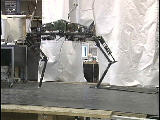
Corn Dog


"Besides demonstrating control of height and pitch, this video demonstrates the ability of Corn-Dog's electric series-elastic actuators to efficiently and robustly absorb the shock energy of each footfall, without any additional elasticity in the leg mechanism."


LXUO


"a series-elastic actuated robot and a simulated model of the well-known Pixar Luxo lamp"

NOW

Title/Author Due/Recalled Current Fee
THNK : CMYK / 2/13/2010,23:59
The independent design guide : innovative products from the new generation / Houseley, Laura. 2/17/2010,23:59
Blowup : inflatable art, architecture, and design / Topham, Sean. 2/17/2010,23:59
The origins of the motion picture; an introductory booklet on the pre-history of the cinema / Thomas, David Bowen. 2/17/2010,23:59
Disney animation : the illusion of life / Thomas, Frank, 1912- 2/17/2010,23:59
The art of papier mache / Kenny, Carla. 2/17/2010,23:59
Animation : the mechanics of motion / Webster, Chris. 2/17/2010,23:59
Pneumatic structures : a handbook of inflatable architecture / Herzog, Thomas. 3/13/2010,23:59
The Keith Haring show / Haring, Keith. 3/13/2010,23:59
Thin skin : the fickle nature of bubbles, spheres and inflatable structures / Clausen, Barbara. 3/13/2010,23:59
Kinetic art: theory and practice. Selections from the journal Leonardo / Malina, Frank J., comp. 3/13/2010,23:59
Bewegliche Teile : Formen des Kinetischen ; anlässlich der Ausstellung "Bewegliche Teile. Formen des Kinetischen", Kunsthaus Graz am Landesmuseum Joanneum, 09.10.2004-16.01.2005 ; Museum Tinguely, Basel, 08.03.2005-26.06.2005 = Moving parts : forms of the kinetic ; on the occasion of the exhibition "Moving Parts. Forms of the Kinetic", Kunsthaus Graz am Landesmuseum Joanneum, Oct. 09, 2004 - Jan. 16, 2005 ; Museum Tinguely, Mar. 08, 2005 - Jun. 26, 2005 / Pakesch, Peter. 3/13/2010,23:59
Principles of pneumatic architecture / Dent, Roger Nicholas. 3/13/2010,23:59
Pneumatic structures : a handbook for the architect and engineer / Herzog, Thomas. 3/13/2010,23:59
The Inflatable moment : pneumatics and protest in '68 / Dessauce, Marc, 1962- 3/13/2010,23:59

IDEAS CIRCUS Peter Cook


Fence

Urban Farming project at CMU (now unfortunately torn down)
 reminds me of Francois Roche's projects .,.,,


Archigram

Archigram was an avant-garde ar­chi­tec­tural group formed in the 1960s – based at the Architectural Association, London – that was fu­tur­ist, anti-heroic and pro-consumerist, draw­ing in­spi­ra­tion from tech­nol­ogy in order to cre­ate a new re­al­ity that was solely ex­pressed through hy­po­thet­i­cal projects. The main mem­bers of the group were Peter Cook, Warren Chalk, Ron Herron, Dennis Crompton, Michael Webb and David Greene.
 michael webb

6
SUITALOON
Mike Webb, 1967


The Walk­ing City